Understanding Fairfield’s Unique Restoration Challenges
Fairfield presents distinct restoration challenges shaped by southeastern Iowa’s climate patterns and architectural characteristics. Spring months bring intense rainfall that overwhelms aging drainage systems in historic neighborhoods, particularly those built before modern stormwater management standards. Basement flooding becomes increasingly common as snowmelt combines with April and May precipitation, saturating soil around foundation walls and creating hydrostatic pressure that forces water through cracks and floor joints.
Summer humidity levels regularly exceed 70%, creating conditions where any moisture intrusion develops into mold contamination within 48 hours if not addressed immediately. Older homes with inadequate ventilation in crawl spaces trap ground moisture year-round, leading to persistent dampness that degrades floor joists and subflooring. Winter freeze-thaw cycles stress exterior materials, causing ice dams on roofs with insufficient attic insulation and frozen pipe failures in unheated spaces.
The community’s mix of century-old structures and modern construction means restoration approaches must adapt to varying building materials and methods. Historic properties often feature plaster walls, hardwood flooring, and balloon framing that respond differently to water damage than contemporary drywall and platform framing systems. Understanding these local factors ensures restoration work preserves property value while addressing damage effectively.
Recognizing Hidden Moisture After Property Damage
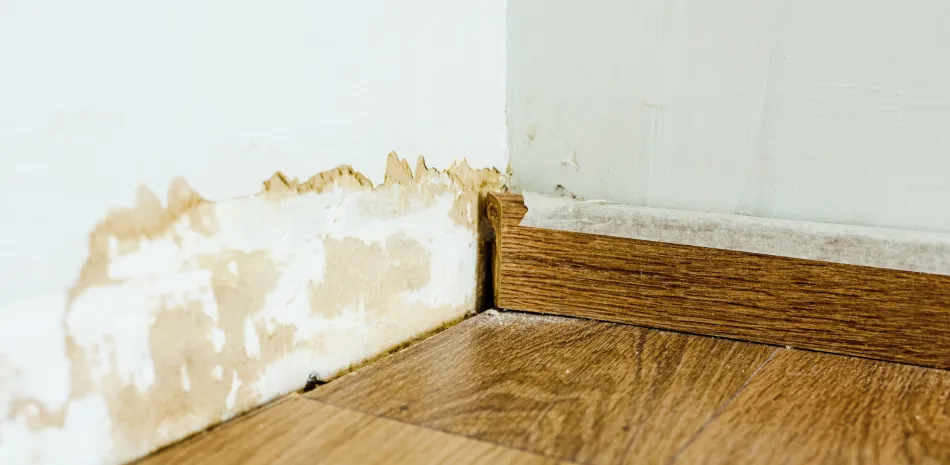
Visible water damage represents only a fraction of moisture-related problems affecting properties. Water migrates through capillary action into porous materials, traveling horizontally through drywall and vertically up wooden studs far beyond the initial intrusion point. Wall cavities trap moisture where air circulation cannot reach, creating environments where drying occurs slowly over weeks rather than days. Carpet padding absorbs water like a sponge, retaining moisture even after surface fibers appear dry to the touch.
Insulation within walls and ceilings becomes saturated during roof leaks and plumbing failures, losing thermal effectiveness while adding weight that can stress structural supports. Subflooring beneath tile, hardwood, and laminate absorbs water from below during basement flooding or above during appliance failures, causing warping and delamination that becomes apparent only after finish flooring develops buckling or gaps. Concrete slab foundations in finished basements retain moisture within their porous structure for months, continuously releasing humidity into living spaces.
Thermal imaging cameras reveal temperature differentials indicating trapped moisture, while pin-type and non-invasive moisture meters quantify water content within various materials. Professional assessment identifies all affected areas rather than limiting restoration to visible damage. This thorough approach prevents secondary mold growth, wood rot, and structural deterioration that emerge weeks or months after incomplete drying. Property owners who address hidden moisture immediately avoid exponentially higher costs associated with neglected water damage.
The Science Behind Effective Structural Drying
Effective structural drying requires manipulating four environmental variables: temperature, humidity, airflow, and time. Warmer air holds more moisture than cooler air, so maintaining temperatures between 70 and 90 degrees Fahrenheit accelerates evaporation from wet materials. Relative humidity must remain low enough to create a vapor pressure gradient that pulls moisture from materials into the surrounding air. Dehumidifiers remove this airborne moisture, preventing it from redepositing on cooler surfaces or being reabsorbed by drying materials.
Air movement across wet surfaces increases evaporation rates by continuously replacing saturated air with drier air. Strategic placement of air movers creates circulation patterns that reach all affected areas, including behind furniture and within partially enclosed spaces. Different materials dry at different rates based on porosity and density. Drywall typically reaches dry standards within three to five days under proper conditions, while hardwood flooring may require seven to fourteen days, and concrete substrates can need three to six weeks.
Moisture mapping throughout the drying process tracks progress and identifies areas requiring additional attention. Daily monitoring with calibrated meters ensures materials reach industry-standard dry goals before equipment removal. Premature equipment withdrawal leaves residual moisture that supports mold growth and material degradation. Professional restoration technicians calculate equipment needs based on affected square footage, ceiling height, material types, and outdoor weather conditions. Iowa’s humid summers require more aggressive dehumidification than drier seasons to achieve the same results. This scientific approach distinguishes professional restoration from inadequate DIY attempts that leave properties vulnerable to ongoing damage.
Navigating Insurance Claims for Restoration Services
Insurance coverage for restoration services depends on the damage cause, policy terms, and documentation quality. Most homeowner policies cover sudden and accidental water damage from burst pipes, appliance failures, and storm-related roof leaks, while excluding gradual damage from long-term leaks or maintenance neglect. Flood damage from external water sources requires separate flood insurance through the National Flood Insurance Program or private carriers. Understanding these distinctions before filing claims prevents denials and disputes.
Immediate documentation proves essential for successful claims. Photographs and videos of damage before any cleanup begins establish loss extent and support cost estimates. Detailed inventories of damaged personal property with purchase dates and values strengthen contents claims. Professional restoration companies provide moisture readings, thermal images, and written assessments that insurance adjusters use to evaluate the necessary work scope. This third-party documentation carries more weight than homeowner descriptions alone.
Mitigation requirements appear in virtually all policies, obligating property owners to prevent additional damage after initial loss. Failing to extract standing water, dry wet materials, or protect exposed areas from weather can result in claim denials for secondary damage. Working with restoration professionals who understand insurance protocols ensures compliance with these policy requirements. Many restoration companies communicate directly with insurance carriers, providing estimates in formats adjusters expect and negotiating appropriate scope when initial assessments undervalue necessary work. This advocacy helps property owners receive full-entitled benefits while avoiding out-of-pocket expenses for covered services. Keeping all receipts, contracts, and communications organized throughout the restoration process creates a complete record supporting final claim settlement.
Why Choose Professional Restoration in Fairfield, IA
Professional restoration services deliver outcomes that DIY efforts cannot match due to specialized equipment, technical training, and experience with diverse damage scenarios. Industrial dehumidifiers remove 10 to 20 times more moisture per day than consumer-grade units, while commercial air movers generate focused airflow that household fans cannot replicate. Moisture detection technology locates hidden water that visual inspection misses, ensuring all affected areas receive appropriate treatment. Attempting restoration without this equipment extends drying time, increases mold risk, and often necessitates complete rebuilding when initial efforts prove inadequate.
Certified technicians understand material science, microbial growth patterns, and structural vulnerabilities that determine proper restoration approaches. This knowledge prevents common mistakes like sealing moisture inside wall cavities, applying antimicrobial treatments to wet surfaces where they cannot function, or removing materials that proper drying could save. Experience with insurance processes, local building codes, and regional climate challenges streamlines projects from initial assessment through final inspection. Established relationships with adjusters, contractors, and suppliers facilitate faster service and better outcomes than property owners can arrange independently.
Facing property damage creates stress that professional restoration teams help alleviate through clear communication, realistic timelines, and systematic project management. Rather than coordinating multiple specialists for water extraction, structural drying, mold remediation, and reconstruction, property owners work with a single restoration company managing all phases. This integrated approach maintains accountability and prevents gaps between service providers that delay completion. For Fairfield property owners dealing with damage from storms, floods, fires, or failures, professional restoration protects both immediate property value and long-term structural integrity. Restoration experts bring the tools, knowledge, and efficiency that transform disaster scenarios into manageable projects with predictable outcomes, helping families and businesses return to normal operations as quickly as possible.